


The cause determines the approach
Treatment for dark circles starts by asking what is making the eye area look dark or tired. Pigmentation, visible blood vessels, a hollow tear trough, swelling and protruding fatty tissue are different findings. Sleep and stress may influence the appearance, but they do not explain every change. Inherited features and skin characteristics also need assessment. No single procedure can therefore offer everyone the same solution.
YOUR VISION · TRY IT HERE
How would you like to look?
Move the sliders to explore a direction that feels right for you. Then add your own photos using the framing guide and enter your contact details.
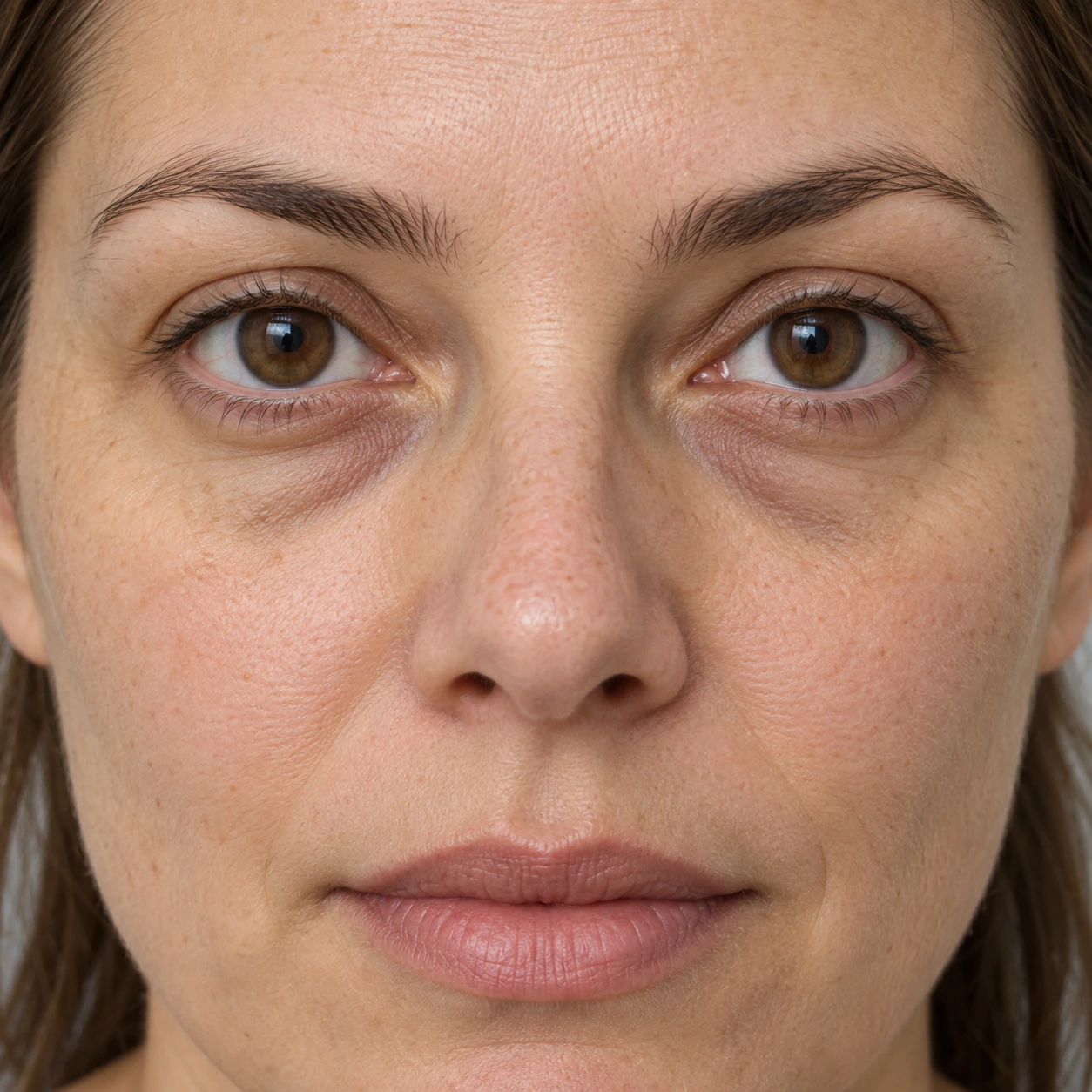 Generated visual example
Preview → Guided photos → Contact details. Every step is optional.
Open the full visual guideMc Aesthetics values a natural-looking eye area that suits your facial features and expression. Before deciding, you should understand what change is realistically achievable and what you want to preserve. Normal anatomical shadows alone do not make treatment necessary. You can contact our team with questions about a consultation in Cologne.
What does the consultation involve?
The responsible doctor examines the eye area in person. Relevant information includes when the changes began and how they have developed, previous injections or operations, products used, medical conditions and medicines. Describe any swelling or other symptoms as well. This information informs the discussion of possible methods, alternatives including no treatment, and your personal risks. Ask about the clinician’s qualifications and experience with the planned procedure.
When might hyaluronic acid be an option?
A hyaluronic acid filler may temporarily change the contour where there is a suitable volume deficit. It cannot remove every area of darker skin, every eye bag or excess skin. Product selection depends on the specific area and the product’s properties; brand recognition does not establish individual suitability. Ask which product is proposed, why it has been chosen and what its limitations are.
Consultation, decision and a possible treatment appointment
An enquiry does not mean an injection has been agreed. The consultation location, responsible doctor and next steps are clarified in advance. Consultation and treatment may take place at separate appointments. You should have enough opportunity to ask questions and make a considered decision. Same-day treatment is not a general promise; timing and the procedure depend on the examination, informed consent and agreed plan.
Before an injection, the treatment area, extent of treatment, possible anaesthesia and risks are discussed. Pain, swelling, bruising, irregularities and infection are possible. Accidental injection into a blood vessel can cause serious tissue damage and visual impairment. A short appointment therefore does not mean a painless or risk-free treatment.
Recovery and assessing the result
An early impression is different from the later result: swelling may initially alter the contour. Duration depends on the product, the initial findings and your individual response. Discuss aftercare, follow-up appointments and whom to contact if symptoms arise. Sudden changes in vision require immediate emergency help. Unusual pain or abnormal skin discolouration after an injection must be assessed medically without delay.
Other concerns and example images
You can also raise questions about the nose, tear trough, cheeks, wrinkles or chin. Each area needs its own assessment; suitability for dark-circle treatment does not automatically extend to other procedures. Images on Instagram, Facebook and YouTube can help start a discussion. Light and perspective affect appearance, and examples do not guarantee a result.
Information and a personal enquiry
People from the surrounding area can find further guidance on the information pages for Brühl and Burscheid. A city page does not confirm a treatment location there; clarify the actual location before making an agreement. Send organisational enquiries to Contact form. Medical examination, informed consent and treatment remain the responsibility of the respective medical providers.