

YOUR VISION · TRY IT HERE
How would you like to look?
Move the sliders to explore a direction that feels right for you. Then add your own photos using the framing guide and enter your contact details.
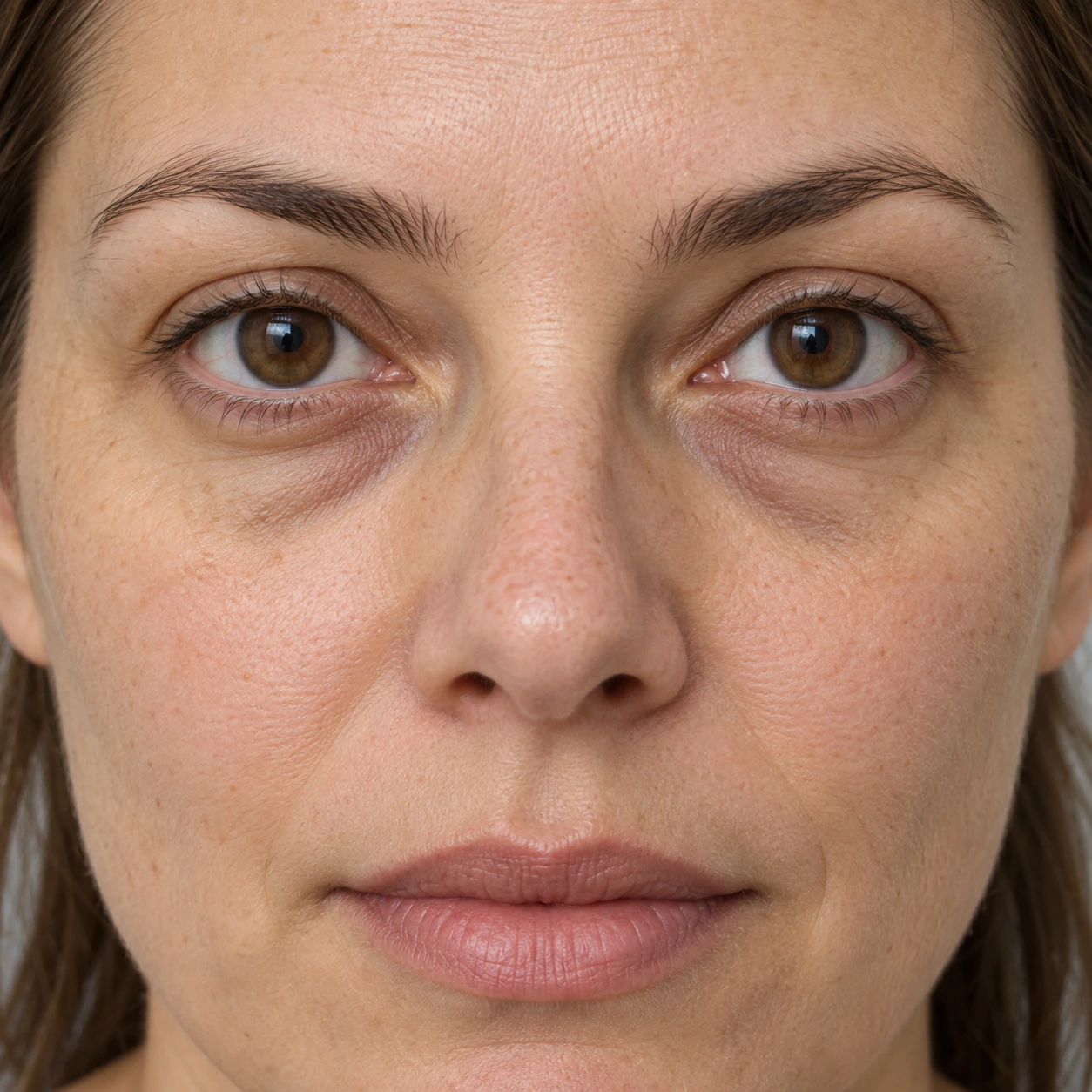 Generated visual example
Preview → Guided photos → Contact details. Every step is optional.
Open the full visual guide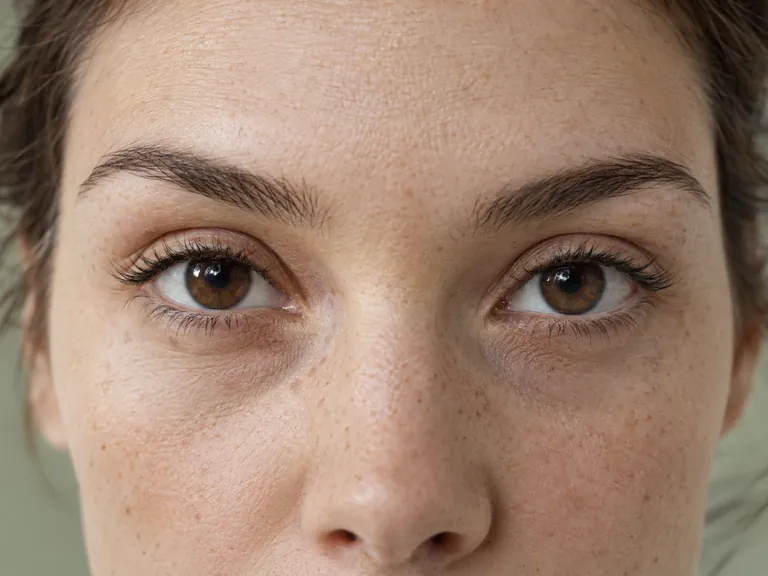
Shadows under the eyes do not all have the same cause
Dark areas beneath the eyes may be caused by pigmentation, visible blood vessels, thin skin or shadows along a deep tear trough. Swelling and protruding fat can also affect the contour. Several factors often act together. There is therefore no single treatment that reliably removes every type of dark circle.
The consultation begins by exploring what has changed and the likely cause. Restoring volume may be considered for a suitable hollow. However, it does not correct a pigmentation disorder and may be unsuitable if you are prone to swelling or have certain eyelid findings.
Adding volume could then make the area look worse. Mc Aesthetics values a natural-looking eye area that suits your personal expression. Your own eye shape and facial expressions should guide the aesthetic approach, rather than exaggerated forms or changing social media trends.
Understanding tear troughs, dark circles and under-eye bags
The tear trough is a transition between the lower eyelid and the cheek. If it is noticeably hollow, it can cast a shadow. Dark circles, by contrast, mainly describe the visible impression of a darker eye area. Under-eye bags is a common term for bulging or swelling of the lower eyelid. These changes call for different considerations.
Excess skin or protruding fat cannot simply be removed with a filler. Depending on the findings, a consultation about eyelid surgery may be useful. The decision depends on the entire eye area, symptoms and expectations; surgery is not automatically necessary.
When a medical examination should come first
Lack of sleep, allergies, skin changes or other health factors can affect the appearance of the eye area. New, one-sided or persistent swelling should not hastily be treated as a purely cosmetic issue. Pain, redness or changes in vision require prompt medical assessment, urgently if the symptoms warrant it.
Home measures such as gentle cooling may feel soothing for a while, but they do not address every cause. Do not use irritating substances near the eyes. A suspected deficiency should be investigated before assuming that supplements or aesthetic treatment will provide a solution.
Mc Aesthetics · KNOWLEDGE
Research, explained
A relevant original study, its measurements and its limits. The findings describe studied groups, not your personal outcome.
Less hollowing is a measurable outcome
A tear-trough study assessed whether hollowing improved by at least one grade after three months.
Participants with improvement · %

Dot = study estimate · line = 95% confidence interval, showing uncertainty in the estimate.
How to read this chart The study addressed moderate to severe hollowing. It does not demonstrate lightening of pigmented dark circles or treatment of under-eye bags.
Data & study design
What hyaluronic acid can do
In selected people, a suitable hyaluronic acid filler can soften a hollow where the lower eyelid meets the cheek. This may make the shadow look less pronounced. The filler adds volume; it neither changes the size of the eye nor generally removes dark skin pigment.
The skin here is thin and the anatomy is complex. Existing swelling, previous fillers, operations and the position of the eyelid margin all affect suitability. Product choice and its use must also be appropriate for the area. Routine filler injections for every case of dark circles would therefore be inappropriate.


Consultation and preparation
The consultation covers when the change began, how it has developed and precisely what you would like to change. The examination includes the eye area at rest and in movement, as well as the transition to the cheek.
Mention any existing conditions, allergies, medicines and previous treatments. Information about fillers already used helps assess whether further injections are appropriate.
The doctor responsible explains whether an injection is an option at all, which alternatives exist and what change is realistic. Waiting or choosing no treatment are also options. Do not stop or change medicines on your own.
Treatment and assessing the result
If treatment is agreed after examination and informed discussion, it is carried out under appropriate hygienic conditions. Anaesthesia can reduce discomfort. Pain or tenderness may still occur. The technique and amount are chosen individually; a fixed number of minutes or a set volume is no substitute for careful planning.
A change in contour may be visible early, while swelling and bruising initially make assessment more difficult. There is no universal number of days after which the result is final. An agreed follow-up appointment allows the course of recovery and any unusual findings to be assessed.
Possible risks
Risks include pain, bruising, swelling, infection, lumps, asymmetry and visible irregularities. Filler placed close to the surface can produce a bluish discolouration. Persistent or recurring swelling is possible, particularly in the lower eyelid area.
A vascular complication can disrupt blood flow and cause tissue damage. In rare cases, severe visual impairment is possible. Unusual pallor, mottled skin discolouration or sudden severe pain require immediate medical assessment.
Any disturbance of vision requires emergency medical help without delay. Even when treatment is performed correctly, this risk cannot be ruled out entirely.
Aftercare, duration and next steps
You will receive personal advice on care, activity and follow-up appointments. An immediate return to all social activities should not be assumed. Contact the treating provider if symptoms are unusual, worsening or persistent. Further injections should only follow a fresh examination.
The effect is temporary, and its course and duration vary. If the result is unwanted, the first step is to establish whether it reflects swelling, a product reaction or a change in contour. Hyaluronidase may be considered for certain hyaluronic acid fillers, but it has risks of its own and does not guarantee a complete return to the starting point.
Personal consultation at Mc Aesthetics
Mc Aesthetics has been helping people explore questions about aesthetic medicine since 2013. For a personal enquiry, contact us by email or Verify WhatsApp access. Our locations overview helps you plan. Before an appointment, we will agree the treatment location, the doctor responsible and the aftercare arrangements with you.
 Questions & guidesDark circles: which treatment fits?
 Questions & guidesPuffy eyes: Causes and assessment
 Questions & guidesBlue under-eye circles: Causes and treatment choices
 Questions & guidesDark circles in men: causes and consultation
 Questions & guidesDark circles in men: distinguishing tear trough hollows from bags
 Questions & guidesRestylane for dark circles: suitability and consultation
 Questions & guidesHyaluronic acid for dark circles: possibilities and limitations
 AboutPersonalised lip treatment: what “bespoke” means