


Six-pack surgery has been part of the Mc Aesthetics offering since 2013. Our focus is carefully planned abdominal contouring that works with your existing anatomy. Individual proportions, a natural transition to the waist and chest, and definition that suits you guide our aesthetic approach.
YOUR VISION · TRY IT HERE
Your shape. Your definition.
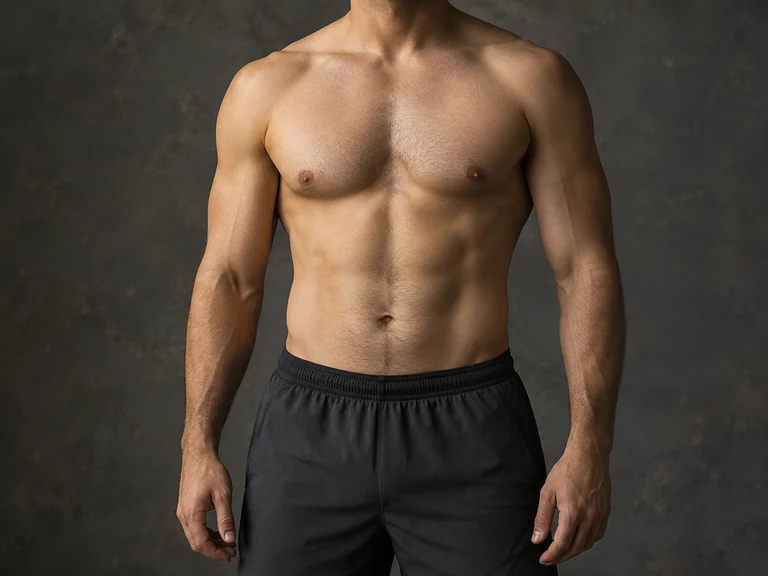
Body contouring for women and men: explore abdominal definition and flank contour separately, from subtle to pronounced, with your own proportions in mind.
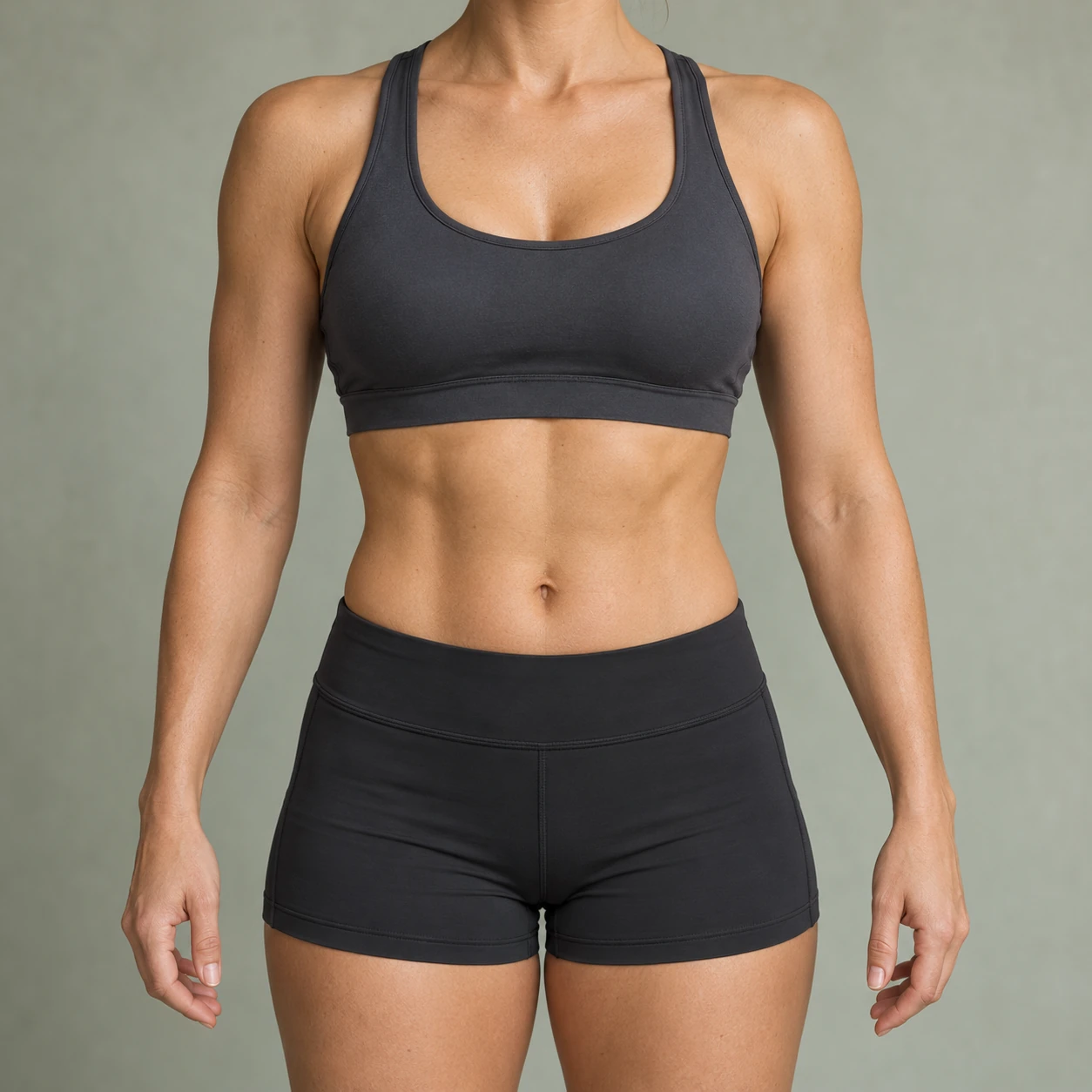 Generated visual example
Preview → Guided photos → Contact details. Every step is optional.
Open the full visual guideWhat is six-pack surgery?
Six-pack surgery, also called abdominal etching or high-definition liposuction, changes selected areas of subcutaneous fat to make existing abdominal muscle contours more visible. It does not create new muscles, increase muscle strength or provide general weight loss. The achievable definition depends on muscle development, fat distribution, skin and healing.
Natural definition as our guiding principle
A balanced abdominal contour is considered in relation to the whole body. Assessment therefore includes the abdomen standing and in movement, the transitions at the sides, and your own wishes.
Subtle definition may suit your build better than deep lines. A standard six-pack pattern or a social media image is not a fixed template. Read about our philosophy of natural beauty.
01 · Understand anatomy
Contours depend on several layers.
Surgery changes subcutaneous fat. The muscles remain your own.
- Skin
Elasticity affects how the contour settles.
- Subcutaneous fat
Liposuction targets this layer.
- Abdominal muscles
Anatomy and training shape the existing form.
Simplified layers, not to scale. Deeper fat around the organs is not removed by liposuction.
ASPS · Liposuction ↗Who may be suitable?
Assessment includes reasonably stable weight, local fat deposits, skin elasticity and existing muscle. Medical conditions, smoking, medicines, previous abdominal surgery and expectations also matter. A single body-fat measurement or a wish for a six-pack is not enough to decide suitability. Women and men alike need an individual examination.
With substantial excess skin, a possible abdominal hernia or rectus diastasis, liposuction alone does not address the underlying issue. Six-pack surgery does not close a gap in the abdominal wall. Assessment may lead to a different treatment proposal or advice against surgery.
Six-pack surgery and liposuction: the difference
Conventional liposuction often focuses on reducing a local fat deposit. Planning six-pack surgery gives additional attention to the transitions along existing muscle contours.
Both are forms of surgical body contouring. The name alone does not establish experience, suitability or quality. Ask which areas will be treated and which contours are deliberately to be preserved.
Mc Aesthetics · KNOWLEDGE
Research, explained
A relevant original study, its measurements and its limits. The findings describe studied groups, not your personal outcome.
Three reported complications compared
The 2023 review combines 21 papers on high-definition liposuction involving 6,964 patients.
Reported proportion in percent (%)

Original chart of selected study values. Scale: 0–5%.
How to read this chart Only three events are shown. This is not the full risk profile or a prediction of individual risk. Reporting varied between studies.
Data & study design
What role does VASER play?
VASER is an ultrasound-assisted technique used to treat fat before suction. It may be part of the plan but does not guarantee an even result or sufficient skin contraction.
Other liposuction techniques also have applications. The choice depends on the findings and how the particular risks are addressed. A device name does not establish muscle growth or a generally gentler treatment.
Plan fat transfer and skin tightening separately
If fat transfer is considered, the target area, tissue plane, expected volume retention and additional risks must be discussed specifically. Fat remains fat and does not become muscle. Overcorrection is not a universal requirement for a natural-looking result. Fat transfer is not automatically part of six-pack surgery.
With substantial excess skin, an abdominoplasty may be assessed as a separate option. It involves different scars, recovery and additional risks. Whether several steps should be combined or staged depends on medical assessment.
Consultation, anaesthesia and procedure
The consultation starts with your goals and an examination. Suitable techniques, alternatives, risks and your aftercare plan are then discussed. Planned areas are marked before surgery. Fat is treated through small skin incisions according to the plan. Operating time, anaesthesia, any hospital stay and the use of drains depend on the extent of surgery and your health.
Ask who will perform the operation, about their qualifications and experience with the specific technique, and how to reach the team afterwards. Mc Aesthetics provides information and supports your enquiry. Individual assessment, informed consent and treatment are the responsibility of the physician concerned.


Preparing for surgery
Bring details of medical conditions, allergies, medicines and previous procedures. Change medicines only in consultation with a physician. Smoking, arrangements for someone to accompany you and the first days at home are also discussed.
Extreme last-minute diets, new intensive exercise programmes or particular supplements are not universal requirements. Follow the anaesthesia team’s individual instructions about eating and drinking before surgery.
Risks and warning signs
Possible effects include pain, bruising, swelling, numbness, fluid collections, infection, scars and uneven or asymmetric contours. Persistent firmness and changes in skin colour can also occur.
Serious possible complications include thrombosis, embolism, injury to deeper structures and anaesthetic complications. Energy-assisted techniques can additionally cause thermal tissue injury.
Increasing severe pain, unusual skin changes, fever or rapidly worsening swelling require prompt medical assessment. Breathlessness, chest pain or collapse need immediate emergency medical help. You should receive specific contact details and instructions for the period after surgery in advance.
Recovery, everyday life and training
Swelling affects the appearance immediately after surgery. The later contour can only be assessed as recovery progresses. Compression garments, wound care and check-ups are planned according to the procedure.
Desk work, physical work and sport place different demands on recovery. Immediate unrestricted social activity or a fixed date for returning to the gym cannot be promised for everyone.
Gentle movement and the later return to training are agreed with the treating team. Intensive abdominal exercise is not a routine early aftercare measure. Nutrition and movement remain important in the long term; surgery does not replace healthy habits. Activity is adjusted if healing is delayed.
03 · Sport & recovery
An active body needs time to recover.
- 01
Prepare
Stable habits and realistic goals. Discuss medicines and your training routine before surgery.
- 02
Recover
Gentle movement as advised by your physician. Pause strenuous abdominal exercise and heavy lifting.
- 03
Build up gradually
Increase the load after medical clearance. Take pain, swelling and healing into account.
Returning to training depends on individual healing. Surgery does not build muscle or replace exercise.
NHS · Liposuction ↗How long does the contour last?
The treated fat distribution may change over time. Remaining fat cells can enlarge with weight gain; ageing, skin changes, pregnancy and changes in muscle also affect appearance. Surgery does not permanently fix the body in a particular shape. Later correction may be needed but is not always appropriate or possible.
What is possible without surgery?
Exercise can build muscle, while suitable nutrition can support overall weight management. Nonsurgical fat-reduction procedures have different applications and risks from liposuction. Cryolipolysis or injection lipolysis do not build abdominal muscles and are not equivalent substitutes for every contouring goal. Choosing no treatment is also an option.
What does careful planning involve?
A specific plan describes the areas, technique, anaesthesia, care and follow-up. It also explains what will deliberately be left unchanged and which expectations seem unrealistic. Images can help a discussion but cannot replace examination or predict your result. Take time to decide; a larger procedure or additional areas are not quality indicators in themselves.
Research and further information
A systematic review from 2023 examines the effectiveness and complications of high-definition liposuction. Another review from 2026 shows that selection criteria and outcome reporting vary between studies. These studies help put a method into context. They do not establish a particular Mc Aesthetics success rate or predict an individual outcome.
Medical background: High-definition liposuction: review 2023 · Patient selection: review 2026 · BAPRAS: liposuction · NHS: procedure, recovery and risks
04 · Treatment & travel planning
Surgery abroad: look closely.
Before surgery abroad, check carefully who will operate, who provides follow-up and who is available in an emergency. Apply the same standards at home.
- Qualifications and a personal consultation with the operating surgeon
- Written aftercare plan and an accessible point of contact
- Time for healing and a medically agreed return journey
- Clear responsibility for complications and further costs
reported complication cases
A 2026 UK registry study examined 198 cases after cosmetic surgery abroad. 48% of these reported cases required surgery under general anaesthesia.
This is a selected series of existing complications, not the complication rate of all surgery abroad or a six-pack-specific statistic. Country alone does not determine quality.
Your next step
Explore natural six-pack contours and individual goals or read about abdominal liposuction for men. For personal advice, you can request a consultation. An enquiry does not commit you to surgery.
 Questions & guidesSix-pack surgery in Cologne
 Questions & guidesSix-pack surgery: natural contours